The Perplexity Audit: Why Your Site is Being Crawled but Not Cited.
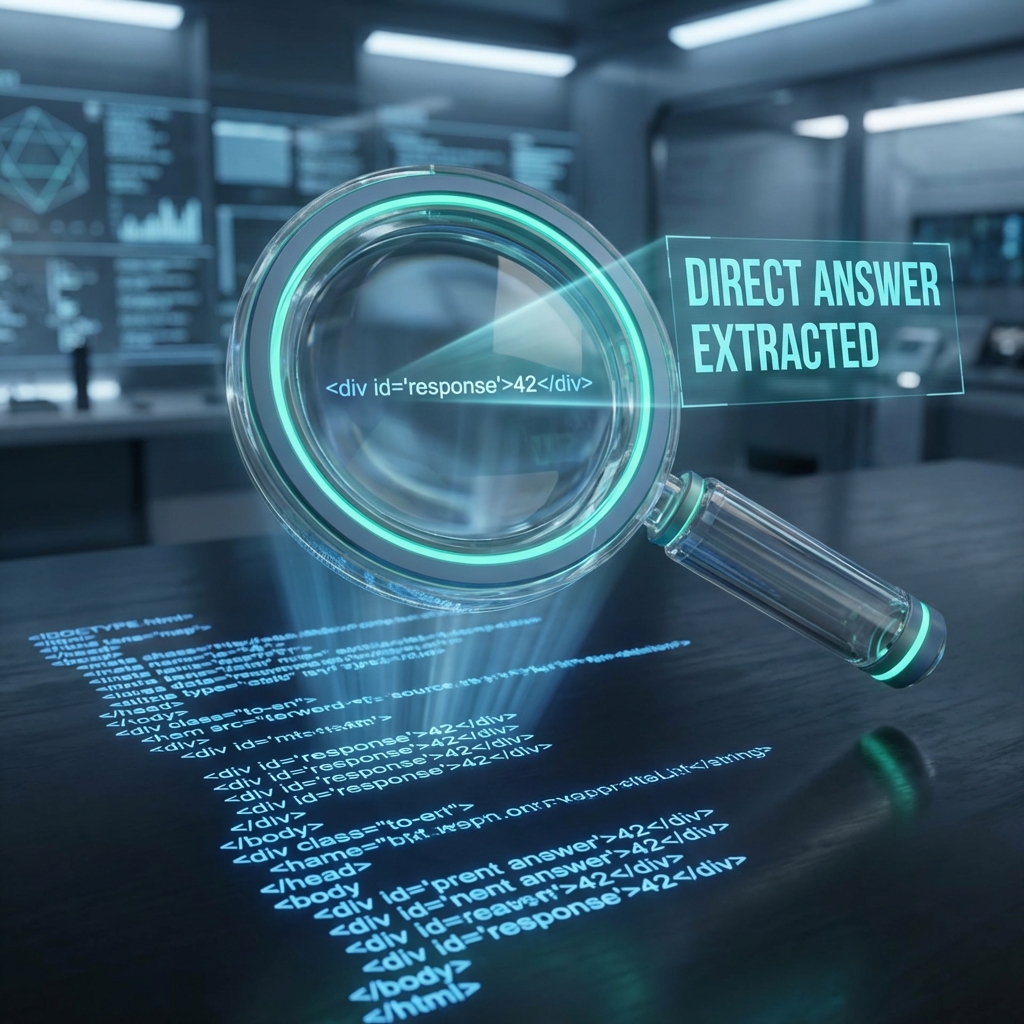
You check your logs. PerplexityBot is there. It's visiting your product pages, your blogs, your pricing. But when you ask Perplexity about your brand, it cites your competitor instead.
This is the most frustrating technical hurdle in modern SEO. The bot can **read** you, but the model doesn't **choose** you. In this technical deep-dive, we explore the "Extraction Gap" and how to fix it.
1. The Text-to-HTML Ratio Problem
Modern web frameworks (React, Next.js, Vue) often ship with a massive amount of "Hydration" code. While this is great for user interactive elements, it's noise for an LLM crawler. If your content is buried 20 <div> tags deep or requires multiple JavaScript execution cycles to render, the AI Agent may time out before it finds the "Meat" of your identity.
AI Agent Extraction Log
2. Semantic Transparency
Does your code *describe* your content? Using generic classes like `.box-1` or `.content-inner` helps nobody. Using semantic HTML5 tags (<article>, <main>, <section>) and descriptive IDs provides "Landmarks" for the AI Agent, allowing it to navigate your data with high confidence.
Flat Codebase
Reduce nesting depth to help LLMs parse your DOM faster.
Metadata Visibility
Ensure your JSON-LD is in the head and fully valid according to Schema.org.
3. The "Answerability" Test
If an LLM crawler can't find a direct answer within the first 1,000 pixels of vertical scroll, it assumes the page is a "Supportive" node rather than a "Primary" node. To be cited, you must put your most important, factual data at the very top of the DOM.
Audit Your AI Crawlability.
Our technical audit detects 'Noise-to-Text' ratios and DOM nesting issues that are blocking your Perplexity citations.
Run AI Crawler AuditPost FAQ & Insights
Instant AI Audit
Free Visibility Scan
Analyze citations across ChatGPT, Gemini & Perplexity in seconds.